How to Measure for a Dehner Boot
Getting the measurements right is critical for a great fitting boot! Before measuring, figure out what kind of boot you want and how you will use them. Ask yourself the following questions:
- Do you do most of your riding in the morning or evening? Do your measuring during that time. (some peoples feet swell later in the day).
- Do your feet retain water (common in women) during any particular time of the month? If so, please measure your feet accordingly.
- Do you have any foot problems like bunions, swelling, corns, calluses, or any bones in the foot or ankle that have been broken in the past? Please note this in the remarks area of the order form.
DO NOT MEASURE YOURSELF! Whenever possible always have a friend for family member measure for you as this will produce much more accurate results.
It is also preferable to take the measurements over breeches and socks to be worn while wearing the boots. If you must measure over a bare leg, indicate this on the form.
* ALL MEASURES ARE CIRCUMFIRENCE MEASURES. ALL THE WAY AROUND THE FOOT
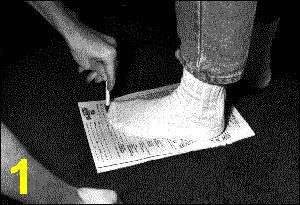 While standing, trace each foot outline on the form, with equal weight on both feet. Be sure to hold the pen (or pencil) perpendicular to the paper – or the tracing won’t be accurate.
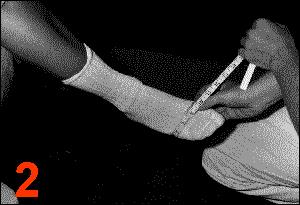 First measure the ball of the foot (from the big toe joint over the little toe joint) with a tape measure. Pull the tape snug, but not too tight, and measure to the nearest 1/8th inch.
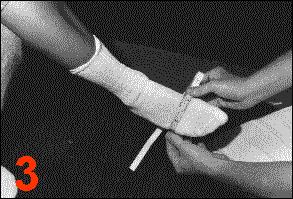 Second is the waist, the narrowest part behind the ball of the foot.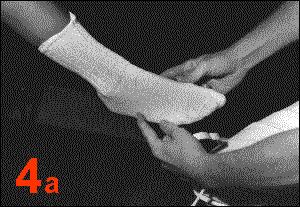
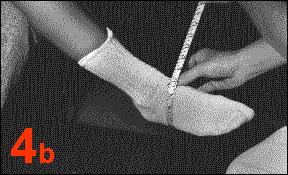
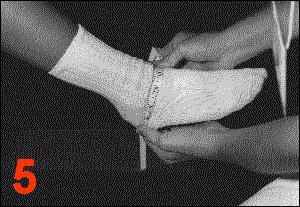 The heel measurement is taken diagonally at the widest point. from the back of the foot to where the front of the leg meets the top of the foot. Make sure the sock is not bunched up.
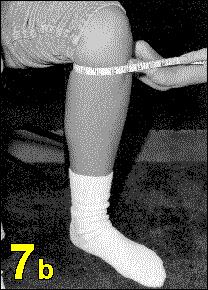
 The calf measurement is taken at the widest point of the calf. Slide the tape up and down to find this spot.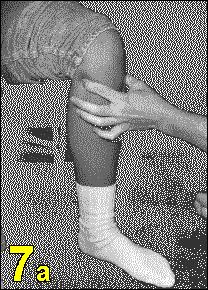
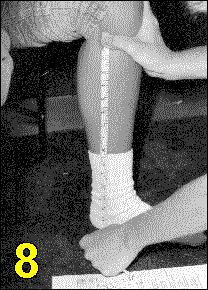 Measure the boot height with the tape, from the point under the knee bone. Hold the tape in place at the top and bring it down to the floor (avoid a sagging or drooping tapes). Then add at least 1 1/4 inch to this measurement to take care of wrinkling in the ankle (a cuff lining might require more, a dressage lining might need less).